
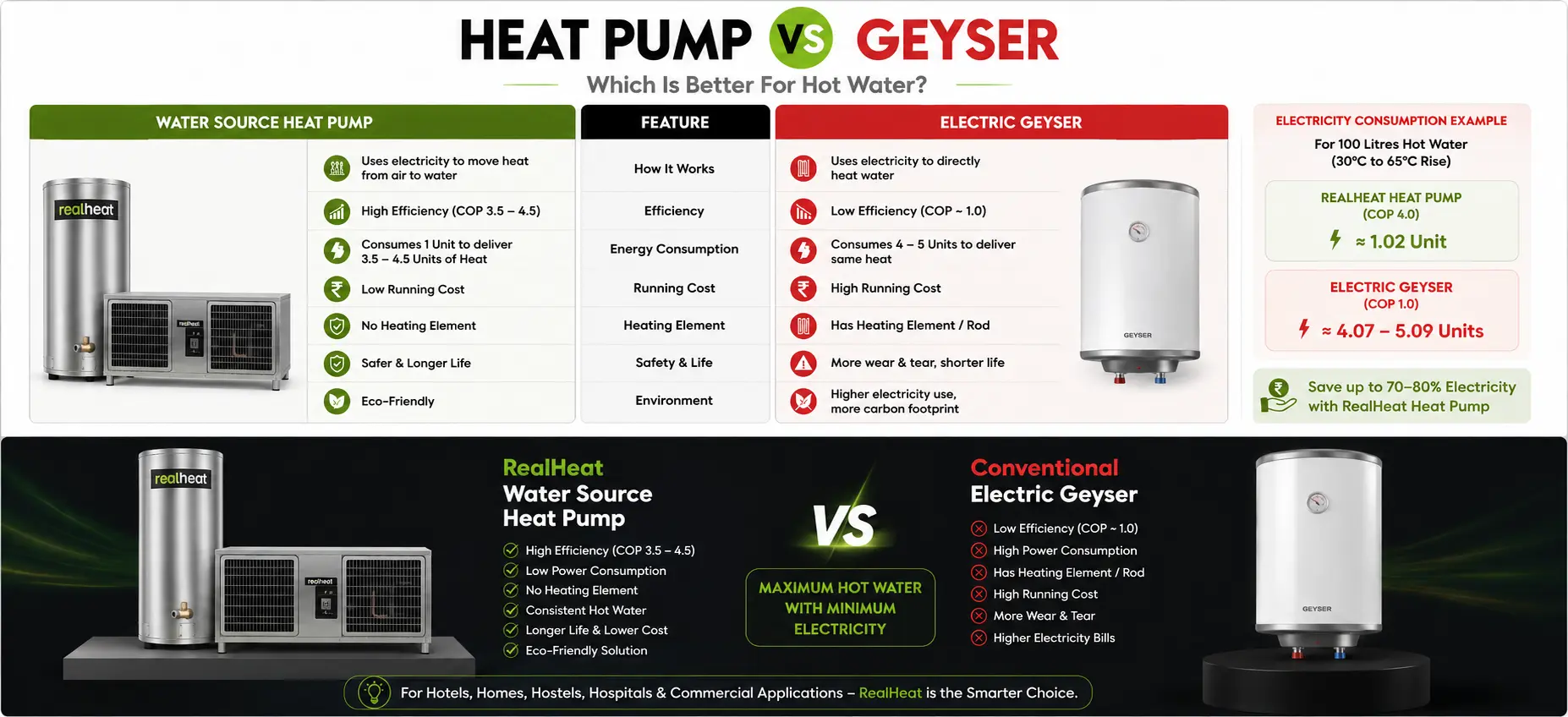
A water heat pump and an electric geyser can both produce hot water, but the technology behind them is very different. That difference directly affects electricity consumption, running cost, hot-water capacity and which type of application each system suits best.
Heat Pump or Geyser — Which Is Better?
For small or occasional hot-water use, an electric geyser can be simpler and less expensive to install. For regular, larger-volume or centralized hot-water demand, a correctly selected heat pump can be far more energy efficient and can reduce electrical input significantly under suitable operating conditions.
How Does an Electric Geyser Work?
A conventional electric geyser normally uses an electric resistance element inside a storage tank. Electrical energy is converted directly into heat, which raises the water temperature.
The technology is simple, compact and practical for smaller bathrooms. But when hot-water consumption becomes large, several resistance heaters operating every day can create substantial electrical demand.
How Does a Water Heat Pump Work?
An air-to-water heat pump absorbs thermal energy from surrounding air, increases the refrigerant temperature through compression and transfers that heat to water through a heat exchanger.
Electricity is mainly used to operate the refrigeration cycle rather than producing all of the required heat directly through resistance.
For the full working principle, read: What Is a Water Heat Pump and How Does It Work? →
Water Heat Pump vs Geyser: Complete Comparison
| Factor | Water Heat Pump | Electric Geyser |
|---|---|---|
| Heating principle | Transfers heat from ambient air | Direct electric resistance heating |
| Electrical input | Can be much lower for the same useful heat output under suitable conditions | Roughly one unit of electrical input gives about one unit of heat before system losses |
| Initial investment | Higher | Lower |
| Running cost | Often lower for regular or high-volume hot-water use | Can become expensive with large or continuous use |
| Hot-water capacity | Can be designed with larger centralized storage | Commonly serves individual bathrooms or smaller tanks |
| Installation | Needs suitable airflow, machine location, plumbing and storage | Usually simpler and compact |
| Best suited for | Larger homes, hotels, hostels, hospitals, resorts and commercial hot-water systems | Smaller, individual or occasional hot-water requirements |
Which Uses Less Electricity: Heat Pump or Geyser?
The biggest difference between these technologies is how they obtain heat.
For example, heating 100 litres of water from 30°C to 65°C requires approximately 4.07 kWh of thermal energy.
Theoretical electrical input before system losses.
Theoretical example at the assumed operating conditions.
Example only. Actual heat-pump performance varies with COP, ambient temperature, water temperatures and system losses.
Read the detailed calculation guide: Water Heat Pump Electricity Consumption →
Initial Cost vs Long-Term Running Cost
Electric Geyser
The initial purchase and installation cost of a geyser is usually lower. For a single bathroom with limited hot-water use, that simplicity can make good practical sense.
Water Heat Pump
A heat-pump system normally requires a higher upfront investment because the complete installation may include the heat-pump machine, storage tank, plumbing, circulation and control system.
Where hot water is used regularly and in larger quantities, the lower electrical input of a heat pump can become increasingly important over the life of the system.
Hot-Water Capacity and Recovery
A geyser generally heats a smaller local volume of water. When the stored water is used, the resistance element reheats the incoming cold water.
A centralized heat-pump installation can combine machine capacity with an insulated storage tank. This allows hot water to be produced over time and stored for morning or evening peak demand.
- Heat-pump heating capacity
- Storage-tank capacity
- Peak-hour demand
- Required recovery time
- Circulation and piping losses
Heat Pump vs Geyser for Hotels
Hotels, resorts and hostels can have many bathrooms requiring hot water during the same morning or evening period.
Installing individual electric geysers in multiple rooms can mean many resistance heating elements operating during peak demand. A centralized heat-pump system takes a different approach: hot water is generated into insulated storage and then distributed to the required outlets.
Room count alone is not enough for proper sizing. Shower flow rate, occupancy, bathing duration, water temperature and simultaneous demand should also be considered.
Heat Pump vs Geyser for Home
For a small home with one bathroom and limited hot-water use, a geyser may remain the simplest choice.
A heat pump becomes more attractive when the home has a larger family, multiple bathrooms or regular high-volume hot-water demand.
Explore: RealHeat Residential Water Heat Pumps →
When a RealHeat Centralized System Makes More Sense
RealHeat water heat pumps are intended for applications where hot water is required regularly and system efficiency, centralized supply and operating cost matter more than simply choosing the lowest initial-cost heater.
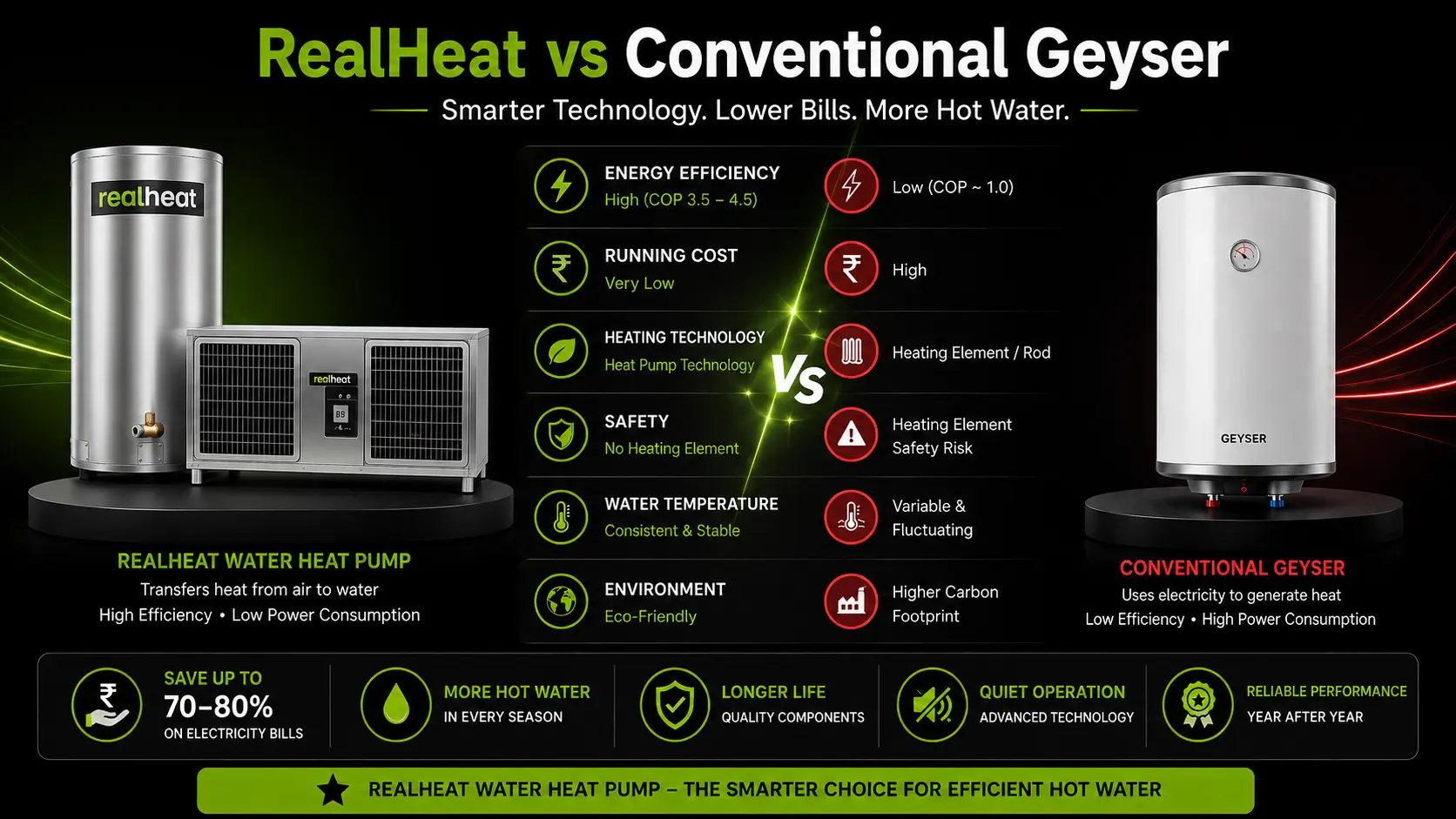
Instead of Multiple Geysers
In suitable buildings, one properly designed centralized RealHeat system can supply several hot-water outlets using a heat pump and insulated storage rather than separate resistance heaters in every bathroom.
Selected from Actual Usage
RealHeat considers people, bathrooms, shower flow, peak demand, inlet-water temperature, target temperature and storage before recommending system capacity.
When Can a Geyser Still Be the Better Choice?
A heat pump should not automatically be recommended for every application.
A conventional geyser can be a sensible option when:
- Only one small bathroom needs hot water
- Daily hot-water consumption is very low
- Hot water is used only occasionally
- Initial budget is the main priority
- Suitable heat-pump installation space or airflow is not available
Which One Should You Choose?
| Requirement | Better Starting Point | Why |
|---|---|---|
| One bathroom, low usage | Geyser | Simple and lower initial investment |
| Large family, multiple bathrooms | Consider Heat Pump | Centralized regular hot-water demand |
| Hotel / Resort | Heat Pump | High daily and peak hot-water demand |
| Hostel / Hospital | Heat Pump | Regular centralized hot-water requirement |
| Occasional hot-water use | Geyser may be sufficient | Low usage may not justify larger system investment |
Should You Replace Your Geysers with a Heat Pump?
Share your number of bathrooms, users, current geyser capacity, shower type and daily hot-water requirement. RealHeat can help you understand whether a centralized heat-pump system makes practical sense for your property.
Compare My Requirement →Frequently Asked Questions
Which consumes less electricity, a heat pump or a geyser? +
Under suitable operating conditions, a heat pump normally needs much less electrical input than direct resistance heating for the same useful hot-water output because it transfers ambient heat.
Is a heat pump always better than a geyser? +
No. A geyser can remain the practical choice for small or occasional hot-water demand. Heat pumps become more attractive as regular hot-water volume increases.
Is a heat pump better than geysers for a hotel? +
For hotels with significant daily hot-water demand, a properly sized centralized heat-pump and storage system can offer major operational and energy advantages compared with many individual electric geysers.
Does a heat pump provide instant hot water? +
Heat-pump systems commonly work with insulated hot-water storage. Hot-water availability at the tap depends on storage temperature, piping and circulation design.
Does RealHeat use a conventional electric heating element as its main heating method? +
RealHeat water heat pumps are designed to heat water primarily through a refrigeration-cycle heat-transfer process rather than conventional direct electric resistance heating.
Can one RealHeat system replace multiple geysers? +
In suitable centralized applications, one correctly sized RealHeat system can serve multiple hot-water outlets. The final system depends on users, bathrooms, simultaneous demand, storage, piping and required recovery time.
Which RealHeat model should I choose instead of my geyser? +
The model should not be selected only from geyser capacity. RealHeat considers actual hot-water demand, users, bathrooms, shower flow, peak usage, inlet-water temperature, target temperature and storage before recommending capacity.
Does RealHeat offer systems for both homes and commercial properties? +
Yes. RealHeat has water heat pump solutions for residential applications as well as larger commercial hot-water requirements such as hotels, resorts, hostels and hospitals.
Final Verdict
For a single bathroom with limited hot-water demand, an electric geyser remains a simple and affordable solution.
As daily hot-water demand becomes larger, the heating principle matters much more. A heat pump's ability to transfer heat from ambient air can significantly reduce the electrical energy required compared with direct resistance heating under suitable operating conditions.
Therefore, larger homes, hotels, hostels, hospitals, resorts and other high-demand applications should compare not only purchase price but also daily hot-water requirement, electricity use, peak demand, storage, recovery and long-term running cost.